
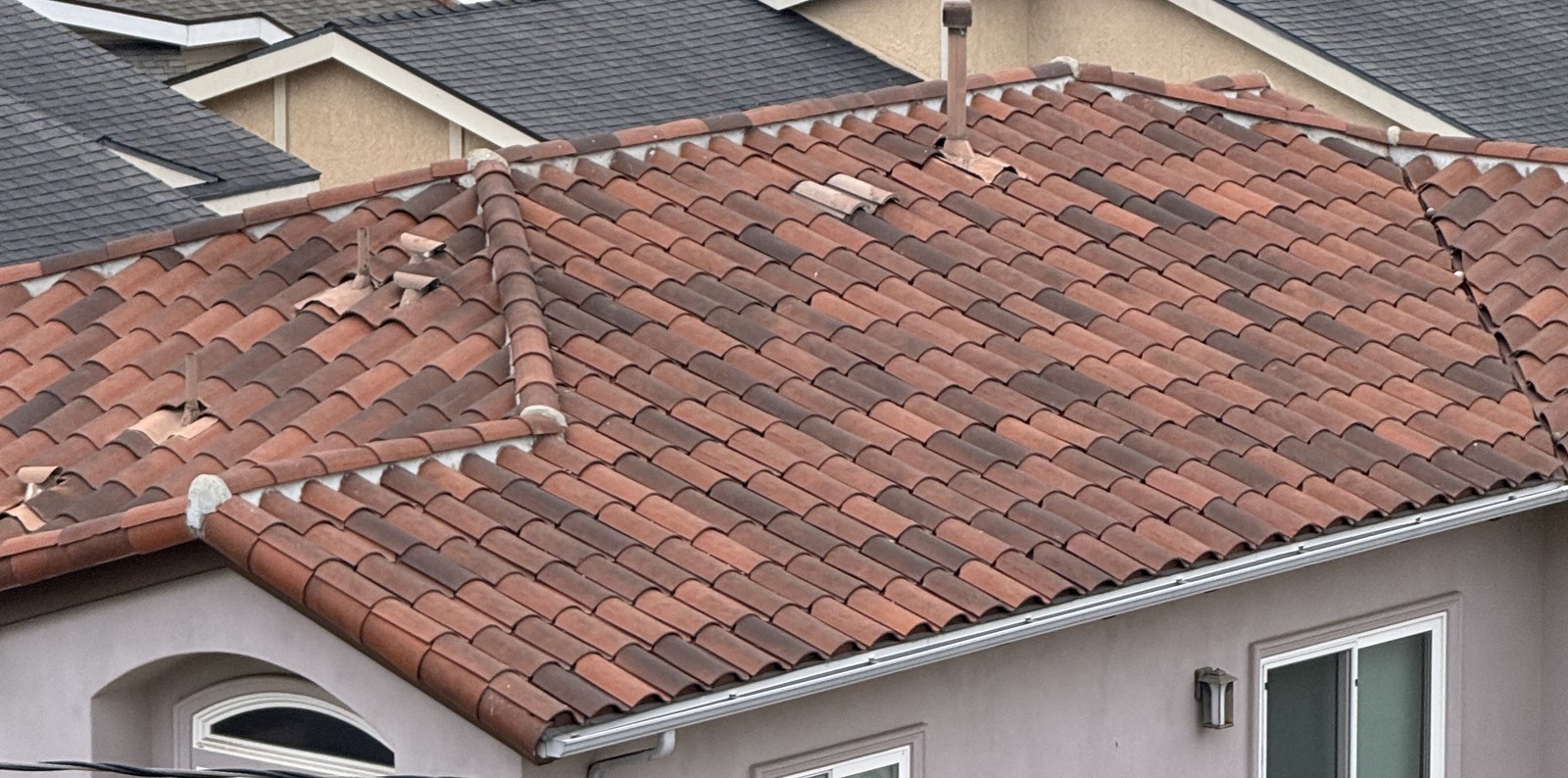
A roof repair starts with one question: where is the water getting in? The stain on your ceiling rarely sits under the damage itself. Water usually enters high, travels along the framing, then appears somewhere unexpected.
This page covers what we check, what we can usually repair, and when replacement is the better spend. It also explains the free estimate and the separate paid written report, which we price individually. Call (424) 532-7527 if you would rather talk it through now.
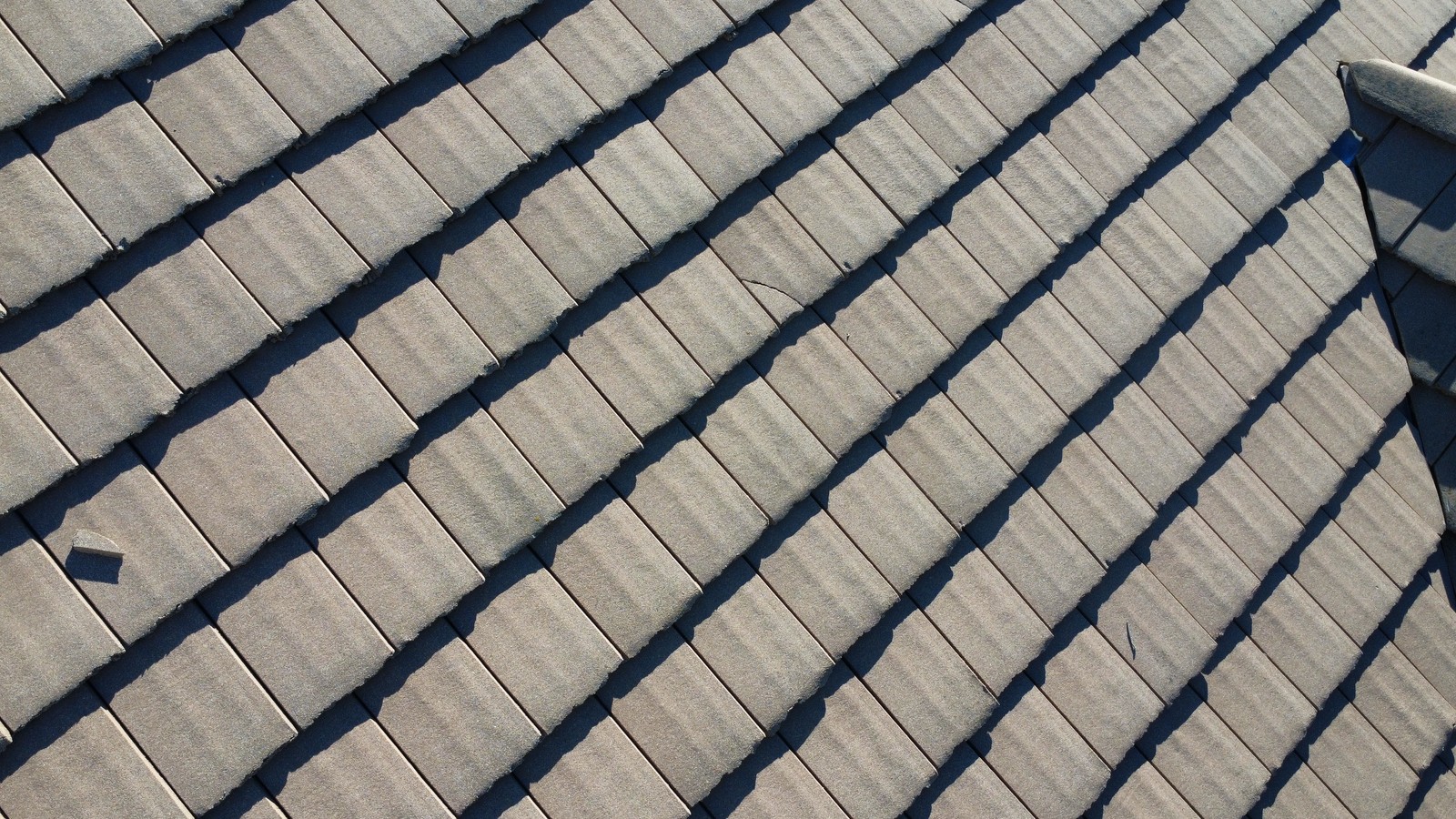
Roof leaks and damage worth a closer look
Leaks bring us more calls than any other roofing problem. People call because water is coming in, not because they want a new roof. So the first job is finding the source, not selling the biggest fix.
Ceiling stains, damp drywall and drips during rain are the obvious signs, but the quieter ones matter equally. Slipped or cracked tile, missing shingles and loose metal at a wall all belong on the list.
Where a wall, chimney or valley meets the roof, thin metal flashing seals that vulnerable joint. It is one of the leading places for a leak to start. Debris packed into valleys and gutters stops water from draining the way it should.
Most of our annual rain arrives during a handful of winter months. A slow failure can sit hidden all summer and then open up in the first heavy storm.
What a repair visit covers
We start with what you can see and hear from inside the building. Then we work uphill from that point, because water travels and usually enters above the stain.
On the roof we look at the covering, the flashing points and the valleys. We check for cracked, slipped or missing pieces and for soft spots underfoot. Where tile can be lifted safely, we look at the underlayment beneath it.
Tile and shingle cover a waterproof sheet called underlayment. The tile above can stay sound while the sheet beneath it wears out. Its condition often decides whether a patch will hold.
Some repairs can be priced from satellite imagery in minutes, before anyone climbs. Either way, our sales estimate stays free. A detailed written report is a separate paid service, and our roof inspection page explains that product.
Repair prices move with the specifics, so a published figure would mislead you. The damaged area, the pitch, the number of stories and the covering all matter. Hidden rot under the covering is the most common surprise.
Roof repair or roof replacement
Most callers ask whether a repair is worth the money. The real answer turns on how far the damage has spread across the roof. No single percentage rule decides it for you, and we will not pretend otherwise.
When a repair makes sense
A repair fits when the damage is contained and the rest of the covering is sound. Slipped or broken tile, a shingle patch and a failed flashing detail are ordinary repair work. Small repair jobs remain a normal part of our roofing service.
When replacement is the better conversation
Broad underlayment failure, rot in the decking and leaks on several slopes all point past a patch. Layers of old covering and general wear change the math as well. When that is what we find, we say so and price roof replacement instead.
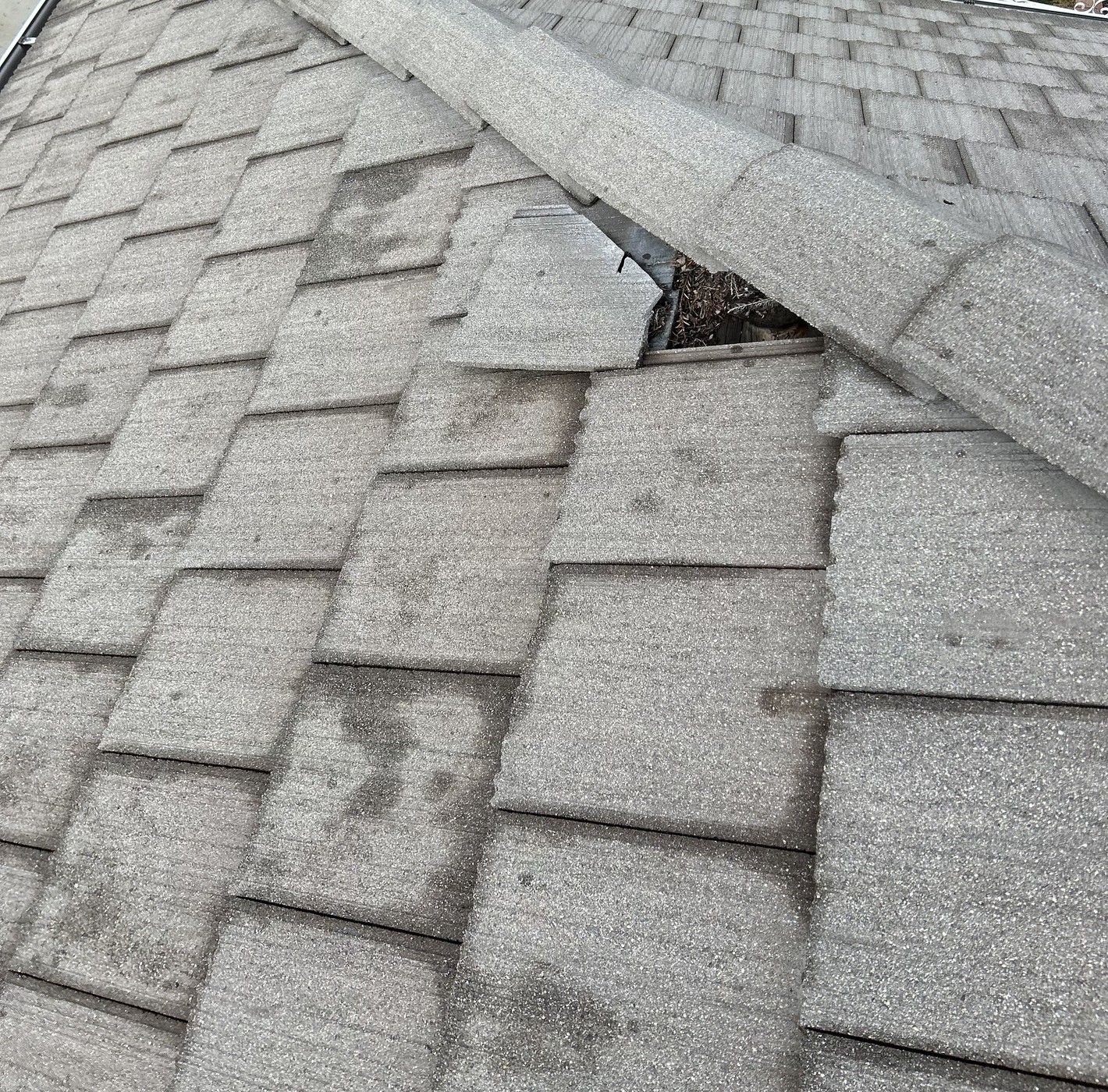
Repairs by roofing material
Tile roofs usually fail below the tile rather than at it. Cracked or slipped pieces can be reset or replaced while the underlayment still has life. Where that layer has failed broadly, our tile roofing page covers lifting and relaying the original tile.
Industry guidance for tile roofs points owners toward regular checks of flashings and underlayment condition. The published tile roof maintenance protocol sets out those inspection points in detail. Read it as background for your questions, not as a verdict on your roof.
Asphalt shingle repairs mean replacing damaged shingles and resealing the details around them. Ridge and hip caps take the weather first and often fail before the field does. Color match on a weathered roof is rarely perfect, and we say so in advance.
Low-slope and flat roofs leak at seams, edges, drains and penetrations rather than across the field. We identify the existing system before proposing anything, and our flat roofing page covers those systems in more depth. We repair metal roofs too, on houses, multi-unit buildings and commercial property.
Scheduling an urgent roof repair
Active leaks during rain are treated as urgent. Tell us what you see, when it started and whether water is still coming in. That detail decides how we sort the day.
Weather and crew availability change daily, so ask for the earliest opening when you call. You will get a straight answer rather than a promise we cannot keep.
Larger repairs sometimes need a permit, and we can walk owners through pulling one from the local authority. The decision on any application rests with that authority.
Call (424) 532-7527 and you reach our roofing team. We price many repairs on the call and book the visit from there.
Caring for the roof after a repair
A repair fixes the spot we found, but it does not make the rest of the roof new. Steady maintenance is what keeps the next problem small.
Keep valleys, gutters and drains clear of leaves and grit, and trim branches that drag across the covering. Check ceilings after the first heavy rain and call if a fresh stain appears.
Before rain season, look over the roof from the ground for slipped tile, loose caps and lifted metal. Binoculars beat a ladder for that job.
Beverly Hills Roofing Contractors is a division of Home Vision Remodel. Call (424) 532-7527 for a free estimate on roof repair in Beverly Hills CA.
Roof repair questions we hear most
How can I tell the leak is coming from the roof?
Start with the timing. Roof leaks usually appear during or just after rain, often near a wall, chimney or valley. Plumbing, windows and air conditioning can leave similar stains, so we trace the path first.
Do you repair commercial and multi-unit roofs?
Yes, residential and commercial roofing are both within our work, including multi-unit and property-managed buildings. Commercial repairs usually involve low-slope systems, so tell us what is on the roof when you call.
Beverly Hills CA
(424) 532-7527