Commercial roof work on an occupied building is a scheduling problem as much as a roofing one. You need to know what covers the building, where water sits, and what the fix costs. This page follows that order, and you can reach us at (424) 532-7527 for a free estimate.
We work on residential and commercial roofs, including low-slope and flat roofs on multi-unit and property-managed buildings. We display our license, CSLB #1112525, because commercial buyers check it before they call. Beverly Hills Roofing Contractors is a division of Home Vision Remodel.
Where a commercial roof decision starts
Most commercial calls we take start with water inside the building, not with a plan. Owners and property managers contact us about an active leak more often than anything else. One leak still tells you very little about the condition of the rest of the roof.
So the first job is defining the scope of the work. We need the roof area, the number of stories, and the route we will use for access. Those answers determine the labor, the equipment and the final price.
Commercial buyers rarely call on impulse, and we plan for that. They check licensing and capability first, then they call with questions ready. We would rather answer those questions on the call than in a brochure.
How we answer the cost question
We will not print a square-foot price here, because the honest answer is a list of drivers. Roofers measure in squares, which are units of 100 square feet. Roof area, the number of stories, access, existing layers and deck condition each affect the final figure.
We can measure many roofs from aerial imagery and talk price before anyone climbs a ladder. What we find on the deck can still change that figure. Rot in the decking under the covering is the most common change order we write.
What is actually on your low-slope roof
Plenty of managers inherit a building with no roof history on file. From the parking lot, most flat coverings look alike. We confirm what is up there on the roof itself, not from a photo.
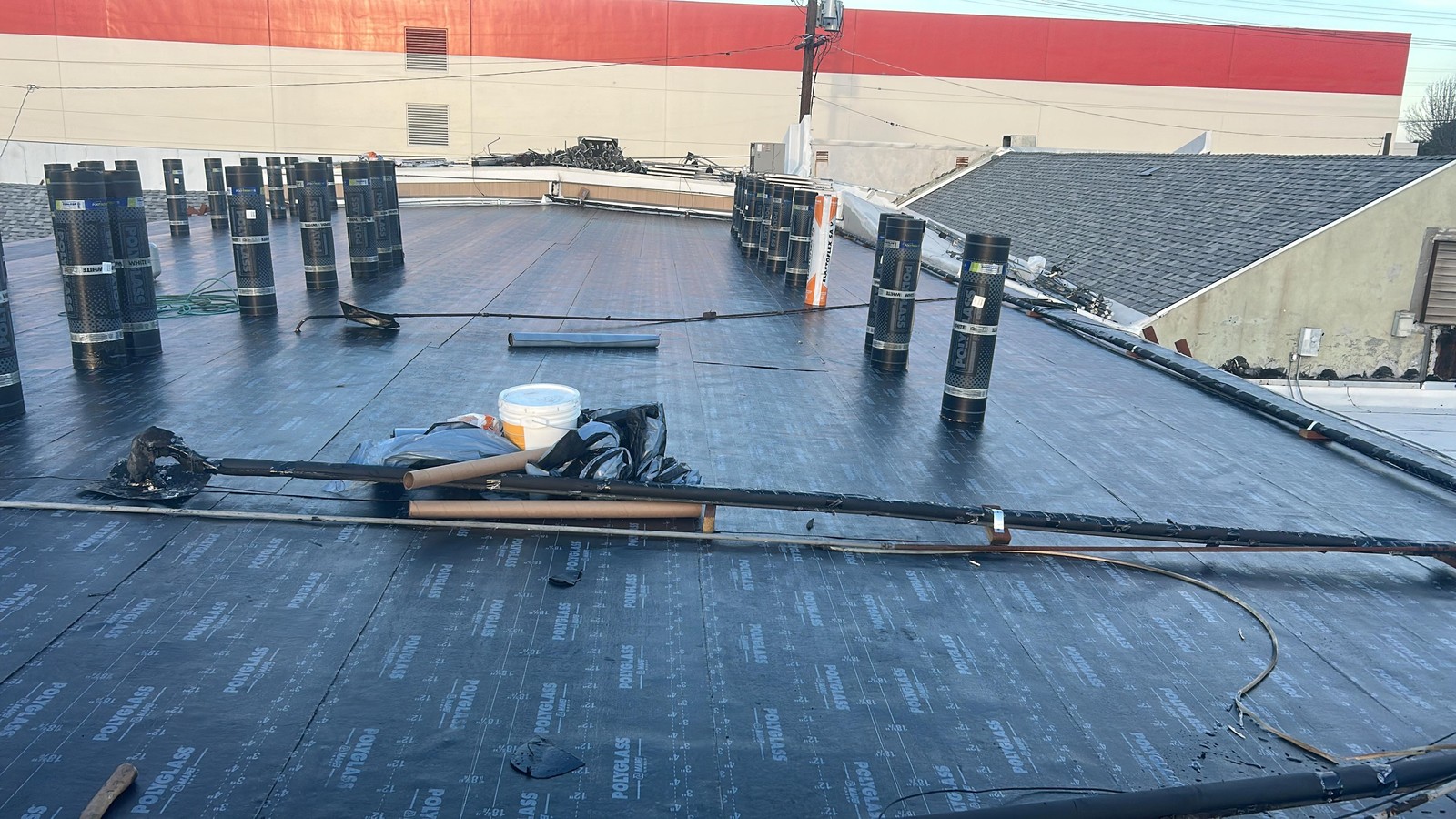
Our default low-slope system is torch-down modified bitumen. That is a flame-applied sheet assembly finished with a granulated cap sheet. We recommend it most often on flat commercial roofs.
TPO is the term many commercial buyers arrive with, and we do install it. If you are comparing, this overview of TPO membrane systems comes from a manufacturer. In our experience, TPO costs more, and its repairs are harder and more expensive.
Two other pages carry the material detail. Our flat roofing page covers torch-down assemblies in depth. The TPO roofing page handles that product line on its own terms.
What we look at on the roof
We walk the field of the roof, the edges and every transition we can reach. Seams, curbs, pipe flashings and wall junctions get the closest look. Flashing, the metal that seals those transitions, is a leading source of leaks.
We also record repairs that someone else already completed. Older patches reveal how the roof has been managed, and they show where water has reached before.
Standing water, seams and rooftop penetrations
Water that remains after a storm deserves a photograph and a phone call. Ponding shows you the areas where water stops moving across a nearly level deck. Finding the reason means examining the deck, the drains and the roof edges.
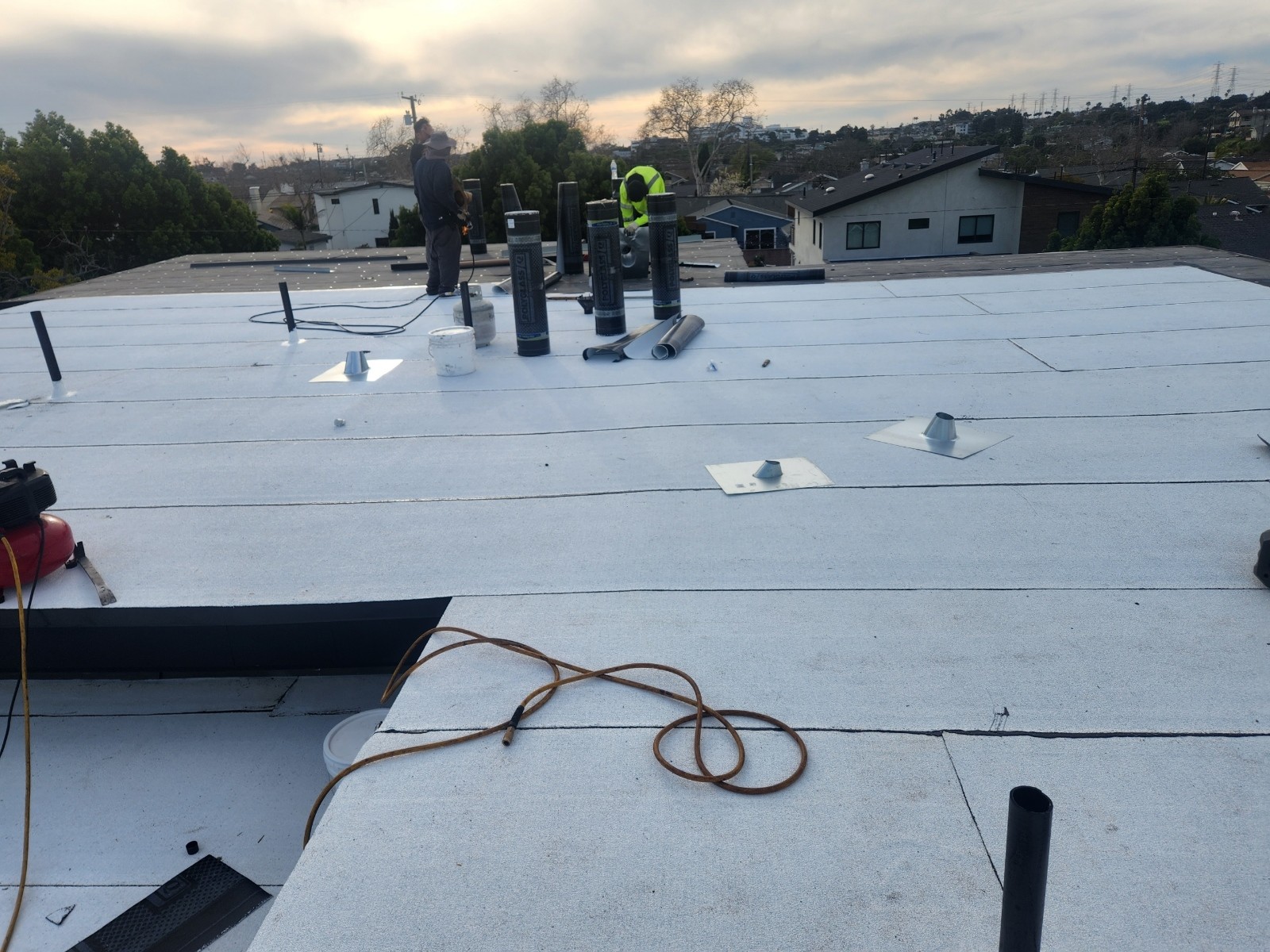
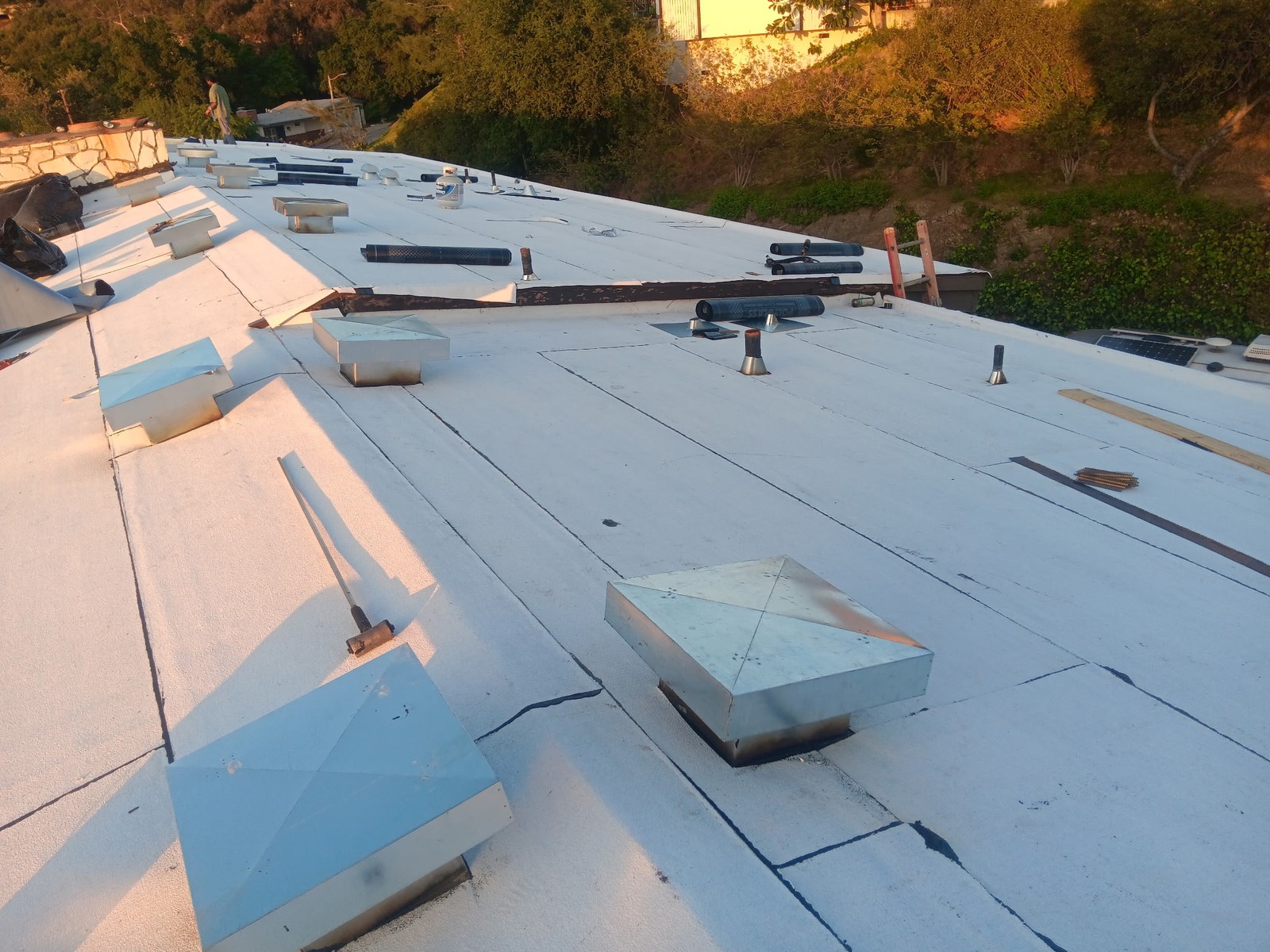
Every pipe, vent and equipment curb is a hole the covering has to close. Commercial roofs collect those penetrations over the years as equipment changes. Each one is a seam, and we check them by hand.
Rooftop units, exhaust fans and vent stacks all sit on details that were flashed at some point. When one of those details fails, water can show up far from the source. We follow it back rather than patch the stain below.
Building staff often know where water shows up first, and that history helps us. Bring it to the estimate, along with any invoices from past repairs.
Observation first, cause second
When the evidence proves a cause, we identify it plainly. When we can only describe the conditions we observed, we say exactly that instead. Guessing at a cause is how a building pays for the wrong repair twice.
Repair now or replace on a plan
Commercial owners usually ask us about repairs first, and that is a fair starting point. A sound repair can protect the building while you develop the capital case. We will also tell you when additional repair money is no longer worth spending.
Our repair work covers leaks, flashing details, shingle patches and loose or slipped tile. The roof repair page explains how we scope smaller jobs. One building can need several of those repairs at once.
Full replacement and reroofing are the other half of the work. Our roof replacement page describes tear-off, deck repair and the new assembly. Tear-off removes every existing layer down to the structural deck, rather than adding another covering above it.
Staging work across budget years
You can stage commercial roof work, and plenty of managers do. Repair the sections that leak now, then plan the reroof for a later cycle. Ask for both paths in the estimate so you can compare them.
Staging has limits, and we usually recommend replacement when leaks appear in several areas at once. We would rather raise that option early than after you have paid for three separate repairs.
Keeping the building open while we work
Occupied buildings determine the shape of a commercial roof project. Your business has to keep operating while we work above it. So access, staging and work sequence belong in the conversation before any price discussion.
We will ask how the building is used, floor by floor, and when it is quietest. We will ask where material can land and how we reach the roof. Those answers shape the sequence more than the roofing system does.
Multi-unit and property-managed buildings come with more stakeholders than a single tenant. Owners, managers and tenants each need a version of the same plan. We keep one sequence and let you distribute it.
Torch-applied work puts an open flame on the deck. That makes controlled access and a clear work zone part of the plan. We settle those details with you before work starts.
Planning around tenant hours
Working hours come out of the walkthrough, not from a page like this. Access windows, deliveries and building rules differ too much between properties. Tell us your constraints, and we will tell you what actually fits.
Rooftop equipment needs its own line in the plan. Tell us which units cannot go offline and which vents must keep running. That changes how we sequence the work around them.
What the estimate covers before work starts
Our sales estimate is free, and it states the work we propose. You use that document to compare bidders and make the case to your decision makers. If you need a detailed written roof inspection and its report, that service carries its own fee.
The estimate should name the assembly, the areas included and what happens if we find rot. We carry a wood allowance in our estimates, with a rate for damage beyond it. That way rotted decking changes the price by a known rate.
Permits and the authority with jurisdiction
We help commercial property owners apply for the roofing permit their project requires. The permit comes from the city or other authority with jurisdiction over the building. Whether your work needs one depends on the job and that authority.
Approval, timing and fees are the authority's call, not ours. We prepare the paperwork and keep it moving on your behalf. Raise it during the estimate rather than after tear-off begins.
When a paid written report is the right ask
Some decisions need a documented record of condition rather than a price. You can read how that service works on our roof inspection page. It is a paid report, and the fee depends on roof size and the number of stories.
Two situations produce most of those requests. Escrow comes first, because a buyer already in contract needs the roof's condition documented before closing. Insurance is the second, and a carrier may want a condition report before issuing or renewing a policy.
A report documents the conditions we observed, while an estimate prices the work we propose. Requesting the wrong document can cost you time during a deadline week.
The same paid report works when you simply need condition on file. Call us at (424) 532-7527 and we will confirm the current fee for your roof. The free estimate stays free, and the report is the part you pay for.
Commercial roofing questions we hear
What does the paid written roof report cover?
It is a written record of the roof's condition, prepared for paperwork like escrow or an insurer's request. We confirm the fee by phone, because roof area and the number of stories both change it. A free estimate is the separate document that prices proposed work.
Who handles roof access and rooftop equipment?
We plan access with you, including the route to the roof and the staging area for material. Equipment that must keep operating changes how we sequence the work nearby. We supply the working sequence you can circulate.
Beverly Hills CA
(424) 532-7527