Water leaves a flat roof slowly, so a low-slope surface has to stay sound across its whole area. A tired seam, a lifted flashing or a blocked drain is enough to let water in. A slow leak can remain invisible for months, then appear suddenly during the first heavy rain.
The useful question is not which product is best, but what your existing roof can still support. We look at the layers on the deck, how water leaves, and where details are failing. That points to a repair, a new surface over the existing covering, or a complete tear-off.
Reading the flat roof you already have
A flat roof is a stack, not a single sheet. Under the surface you may find an older covering, layers of felt, and the wood deck beneath. What sits in that stack changes what we can safely put on top.
A photo rarely settles it, because a picture shows color and texture rather than the layers underneath. We check that on the roof, at the edges and at any opening already cut into the surface. A warranty term on the old material does not tell you how much life is left.
The number of existing layers matters for a practical reason. Each added surface puts more weight on the same deck and hides what is underneath. Several stacked layers usually point toward stripping the roof rather than adding to it.
A single ceiling stain does not reveal how much of the roof surface has actually deteriorated. The covering is often tired in places and still sound elsewhere. Sorting one from the other is the point of the first visit.
Where the water actually goes
A low-slope roof sheds water through a few small outlets. Those outlets are the drains, plus any scuppers cut through the low wall at the edge. When one blocks, water spreads across the surface instead of leaving it.
Standing water after a storm is a symptom, not a verdict. It can sit over a blocked outlet, under built-up debris, or in a settled low spot. We would rather investigate it on the roof than speculate from the ground.
Upkeep on a flat roof is mostly about keeping water moving. Leaves, loose granules and packaging from other trades all end up at the outlets. Clearing them before the wet months is simpler than tracing a leak later.
Why timing matters here
Local rain concentrates into a narrow winter season, following months of dry weather. Faults build up quietly through summer and then show themselves together. Work planned before the wet months tends to start on a dry surface.
Seams, flashings and penetrations
The middle of a flat sheet is rarely where a roof fails. Water gets in where sheets meet, where the roof turns up a wall, or around a pipe. We look hardest at the flashing, the metal detailing that seals those transitions and commonly fails.
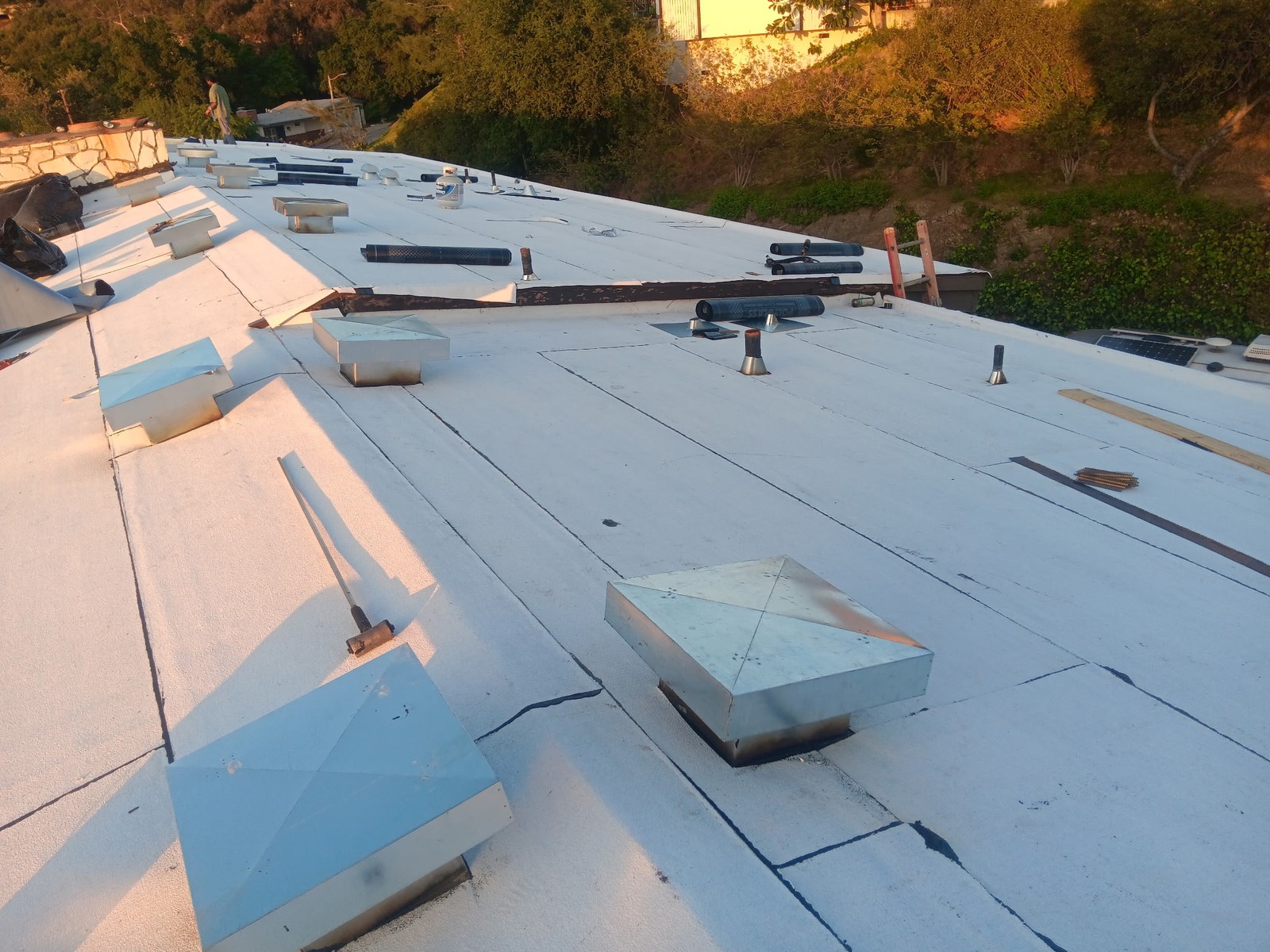
Every penetration is a hole that someone sealed. Vents, drains, pipe collars and equipment curbs all pass through the surface. Each one needs its own detail, and each one ages on its own schedule.
Old repairs on a flat roof tell their own story. Thick black sealant spread over a seam usually means somebody treated the symptom quickly. We note where those patches sit, because they mark the details that failed first.
Where the main surface is sound and the details are not, a targeted fix is the honest answer. Our roof repair page explains how we scope that kind of work. On a flat roof it usually means opening the detail and rebuilding the layers around it.
Repair, new surface or full tear-off
Three routes are open in principle, and the roof decides which ones are real. A repair treats a defined area and leaves the rest alone. A new surface over the old one can work when the layers below are sound and dry.
A tear-off strips every existing layer, exposing the bare deck instead of adding another surface. We take that route when the deck is soft, or when too many layers are already stacked. Deck rot is the usual reason a scope expands once demolition begins.
A single defect does not always justify a new roof. We take defined repairs on flat roofs, and many buildings only need that for now. When the same area keeps failing, we will say that renewal is the better route.
We can start from satellite imagery to size the roof and give you an early number. On the roof, we look at the outlets, the seams, the details and any soft areas. Then we set out the options: repair, a new surface, or a full tear-off.
Replacing a whole flat roof is planned work, and we schedule it that way. Our roof replacement page sets out the wider tear-off and staging process. Our ten-year workmanship warranty covers a documented full replacement.
A free estimate and a paid report are different things
A sales estimate for flat roof work is free, and it prices the job in front of us. A detailed written inspection report is paid work, and we quote it separately. Buyers in escrow and owners facing an insurer's inspection request usually need that report.
Cost follows the same facts we are checking on the roof. Roof area, building height, existing layers and deck condition decide where the estimate lands. We also help property owners pull roofing permits when required, though approval stays with the city.
Torch-down modified bitumen roofing
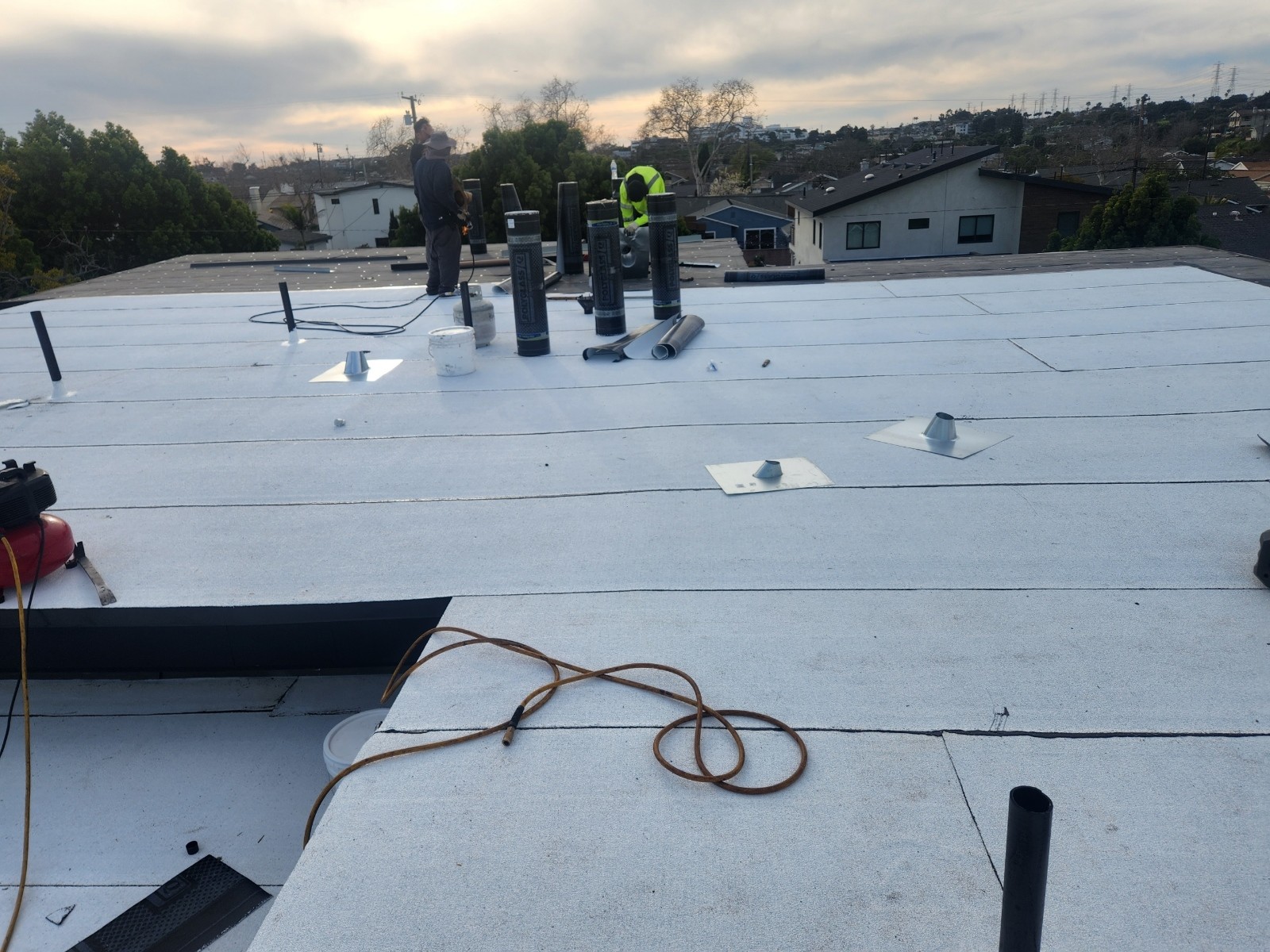
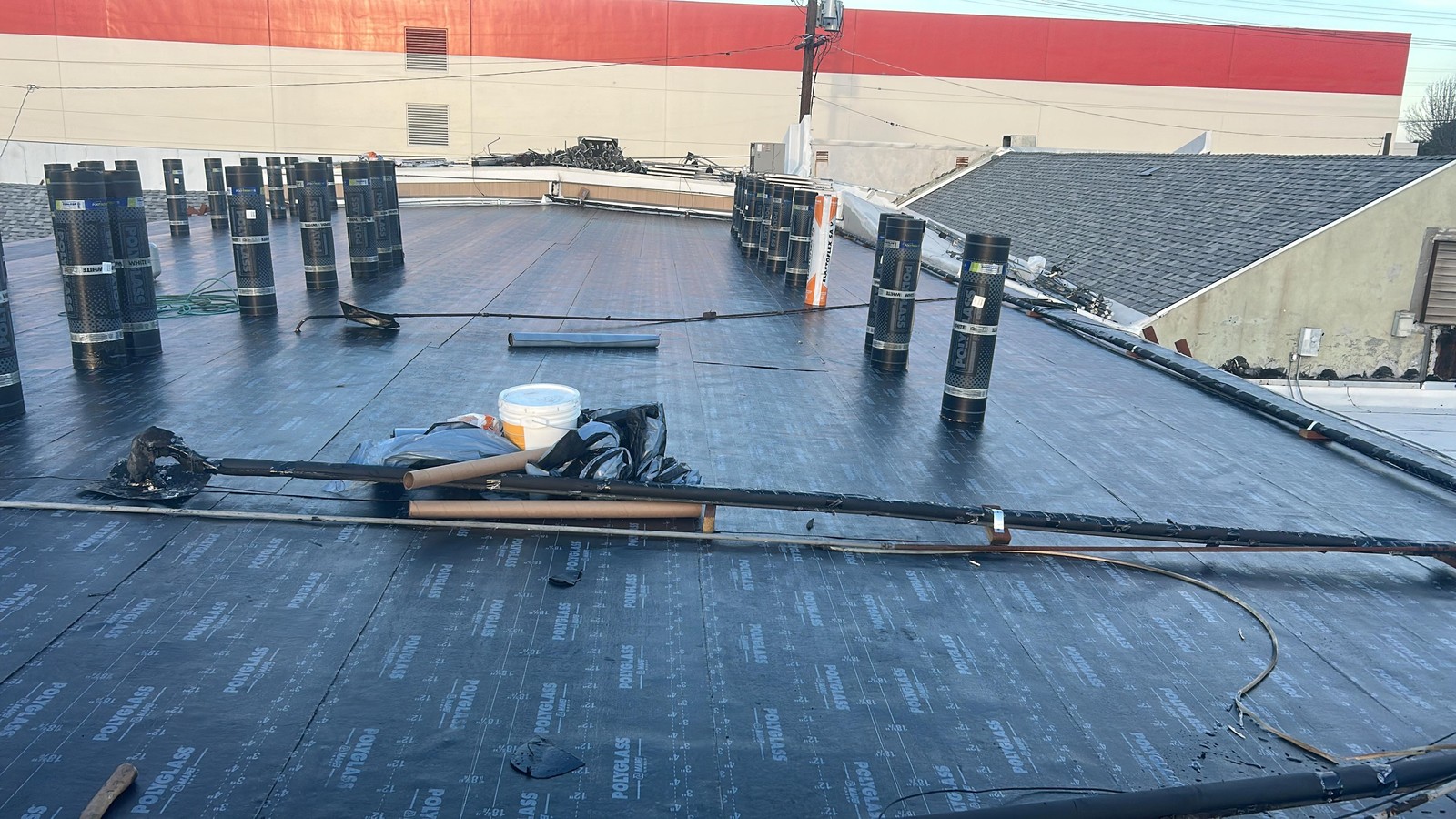
Our usual answer on a flat roof is torch-down modified bitumen. The system arrives in rolls, goes down in layers, and is finished with a cap sheet. A cap sheet is the granulated top layer of that assembly, and it takes the weather.
The cap sheet we use most often is Polyglass Polyfresko G, a white granulated sheet welded down with heat. Torch-down describes that method, because we melt the sheets together as we lay them. A manufacturer's product warranty is a separate matter from our workmanship warranty.
A torch-down roof is more than its top sheet. Base layers go down first, and metal edging holds the assembly at the perimeter. We build the details at walls, curbs and outlets by hand, and that is the slow part.
Where TPO fits
Some owners arrive asking for TPO, which is a single-ply membrane sheet. We install it, and our TPO roofing page covers how that option differs. Torch-down remains our usual recommendation on most flat roofs.
Access, occupied buildings and rooftop equipment
Most flat roofs carry equipment that work has to move around. Units, ducts and their curbs sit directly on the surface we are renewing.
Access to the roof influences our schedule as much as its condition does. We need a route for material and a place to land the old covering. Where the only way up is a hatch or ladder, the work simply takes longer.
Occupied buildings add their own questions about noise, parking and access. Property managers often check licensing and capability before they call. Our commercial roofing page covers access and scheduling on buildings that stay in use.
Getting a straight answer on your flat roof
We work on flat roofs for homes and for commercial buildings, under CSLB #1112525. Tell us what you are seeing, and we will start with a free estimate. Call (424) 532-7527 and describe the building and the problem.
We can size a roof from satellite imagery first, then confirm the details on site. Beverly Hills Roofing Contractors is a division of Home Vision Remodel.
Flat roof questions we hear
How long does a flat roof last?
A warranty term is not the same thing as how long a roof lasts. What matters is the actual condition in front of us: the seams, the outlets and the deck.
Is it okay to have standing water on a flat roof?
It is worth looking at, but it is not a diagnosis on its own. Water can sit over a blocked outlet, under built-up debris, or in a settled low spot. We check the drains and the low areas before we say what is causing it.
Is the written roof report included with a free estimate?
The estimate is free, and it gives you a price for the work we can see. A written inspection report costs extra, because it is a separate service. Its fee varies with the roof and the building, so call us for the current figure.
Do you pull the roofing permit?
Yes, we help property owners pull the roofing permit from the city that issues it. The city keeps the decision on approval and timing, so we plan the work around its process. Whether a particular job needs a permit depends on the scope, which we confirm first.
Beverly Hills CA
(424) 532-7527